
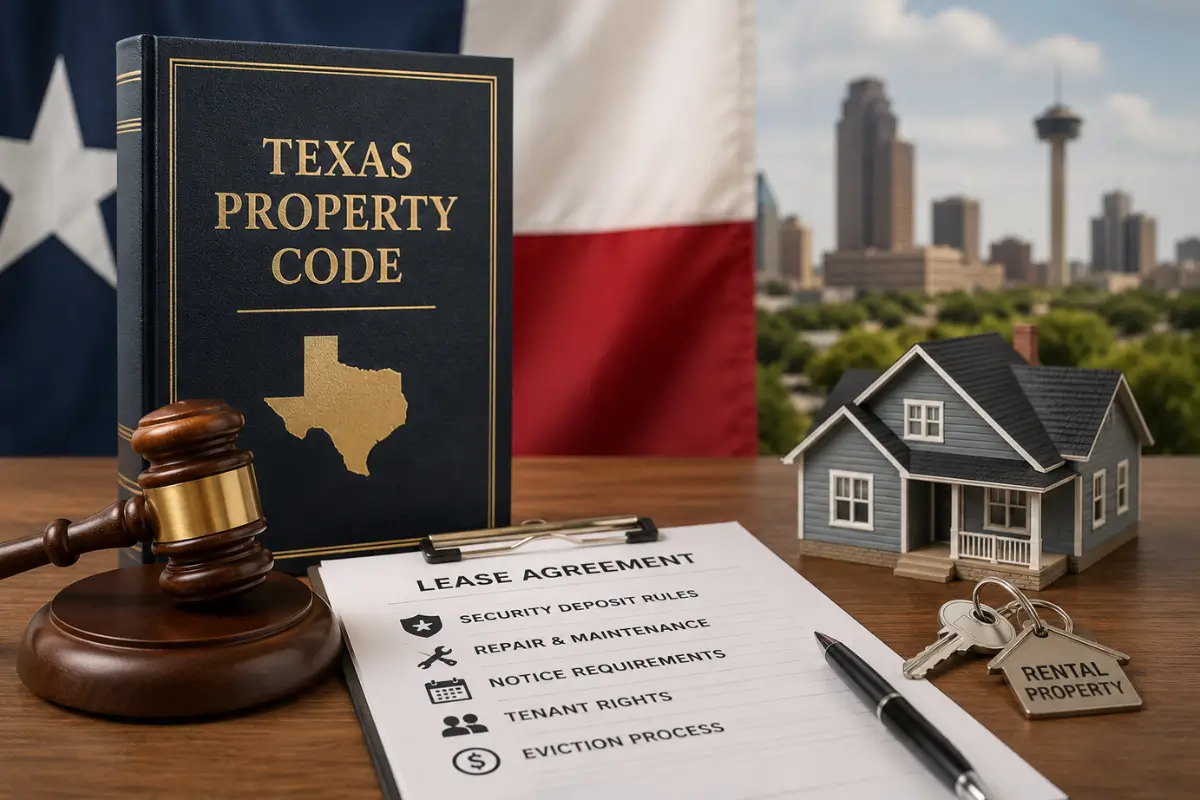
Texas is one of the most landlord-friendly states in the country, but that does not mean you can wing it.
With over 4.3 million renter-occupied housing units across the state and a population that grew by more than 4 million people between 2010 and 2020, the Texas rental market is booming. Investors are flooding in.
And unfortunately, so are costly legal mistakes.
Before you hand over a set of keys, you need to understand the Texas Property Code.
Ignoring even one provision can expose you to lawsuits, financial penalties, or a tenant who legally does not have to pay rent. That is not a scenario any investor wants.
The good news? Texas property law is actually straightforward once you break it down.
And with the right property management partner, like TX Sparks Property Management, which has been helping landlords across the Dallas and Austin metros stay compliant since 2017, you do not have to navigate it alone.
So let us break it all down, section by section.
1. Security Deposits: The Rules Are Stricter Than You Think
Here is where many first-time landlords in Texas stumble, and it costs them.
Under Texas Property Code § 92.102–92.111, there is no statewide cap on how much you can charge for a security deposit. That flexibility sounds great.
However, once you collect that deposit, the clock starts ticking on your legal obligations.
You must return the security deposit within 30 days of the tenant vacating the property. If you make any deductions, you are required to provide an itemized written description of each charge.
Fail to do this, and under § 92.109, a tenant can sue you for three times the amount wrongfully withheld, plus attorney's fees.
A few key rules to follow:
Do not commingle funds. Keep security deposits in a separate account from your operating funds.
Normal wear and tear is not deductible. Scuffed paint or minor carpet wear does not count. Intentional damage or excessive filth does.
Document everything. A move-in and move-out checklist with photos is your best protection.
Think of the security deposit as borrowed money, because legally, that is exactly what it is.
You can also read: How to Handle Unauthorized Occupants and Property Fraud in Texas.
2. Your Duty to Repair and Maintain the Property
As a landlord in Texas, you are not just collecting checks. You are legally obligated to keep your property in a condition that does not endanger your tenant's health or safety.
Texas Property Code § 92.052–92.061 outlines this clearly.
Once a tenant provides written notice of a condition that needs repair, you have a reasonable time to fix it, which courts typically interpret as seven days for urgent habitability issues.
What qualifies as a habitability issue? Think:
Plumbing or sewage failures
Heating systems in winter months
Roof leaks that affect structural integrity
Pest infestations caused by building conditions
Electrical hazards
If you fail to make repairs after proper written notice, tenants have legal remedies.
They can terminate the lease, repair the issue themselves and deduct the cost (up to one month's rent), or seek a court order compelling you to fix it. In extreme cases, they can withhold rent entirely.
This is precisely where TX Sparks Property Management's construction-backed property management approach makes a measurable difference.
The team conducts monthly walkthroughs at managed properties, catching issues before they become written complaints or code violations.
Internally, TX Sparks Property Management reports a 65% reduction in emergency repairs across its managed portfolio thanks to this proactive model.
For investors in the Dallas Metro (Frisco, Celina, Carrollton, McKinney, Plano, and Aubrey) and the Austin Metro (Cedar Park, Leander, Round Rock, and Georgetown), that level of prevention directly protects your NOI.
You can also read: How Proper Property Maintenance Helps Increase Your Property Value.
3. Required Security Devices: This One Surprises a Lot of Investors
Most investors know about deadbolts. Fewer know about the full scope of what Texas law actually requires.
Under § 92.153, every residential rental unit in Texas must be equipped with:
A window latch on each exterior window
A door viewer (peephole) on each exterior door that is not a sliding glass door
A pin lock or door handle latch on each sliding door
A deadbolt lock on each exterior door
Beyond that, § 92.156 gives tenants the right to install additional security devices at their own expense, provided they give you a key and do not damage the property. You cannot legally prohibit this.
Why does this matter financially? Because if a tenant is burglarized and you have not complied with these requirements, you may face civil liability, especially if the tenant previously requested the missing device in writing.
Before your first tenant moves in, do a full security walk-through. It takes an hour and can save you from a lawsuit that costs thousands.
You can also read: How Predictive Maintenance Saves Thousands Per Year.
4. Lease Disclosures You Cannot Skip
Texas law requires landlords to disclose certain information to tenants, both in writing and, in some cases, physically on the property.
Here are the most critical ones:
Owner or Agent Identity (§ 92.201): You must disclose in the lease the name and address of the property owner, or the name of an authorized management company. If you use a property manager, their contact information must be accessible to the tenant.
TX Sparks Property Management handles this as part of standard lease administration, ensuring every managed property across Dallas and Austin meets this requirement from day one.
Lead-Based Paint Disclosure: This is a federal requirement under the Residential Lead-Based Paint Hazard Reduction Act for any property built before 1978. You must provide tenants with a federally approved disclosure form and the EPA pamphlet "Protect Your Family from Lead in Your Home." Skipping this can result in fines up to $11,000 per violation.
Move-Out Procedures (§ 92.103): At or before move-in, you must provide tenants with a written description of the unit's condition that will be used to calculate security deposit deductions, or provide a written list of existing damages. This is not just best practice. It is the law.
Taking disclosures seriously protects both parties. Tenants feel respected, and you avoid the disputes that derail profitable investments.
You can also read: The Ultimate Property Maintenance Checklist in Texas.
5. What You Absolutely Cannot Do as a Landlord
Texas law does not just tell you what to do; it also tells you what is off-limits. And some of these prohibited actions carry serious consequences.
No Lockouts (§ 92.0081): You cannot change the locks, remove doors, or cut off utilities to force a tenant out, even if they have not paid rent. This is called a "self-help eviction," and it is illegal in Texas. Tenants can sue you for one month's rent plus $1,000 in damages, actual damages, and attorney's fees.
No Utility Shutoffs (§ 92.008): Similarly, you cannot interrupt or terminate electricity, gas, water, or other utilities as a method of eviction. If you do, the tenant can obtain immediate relief through the courts and recover significant damages.
No Retaliation (§ 92.331): If a tenant files a complaint with a government agency, exercises a legal right, or reports habitability issues, and you respond by raising rent, reducing services, or initiating eviction within six months, that is legally considered retaliation. The burden then shifts to you to prove your actions were unrelated.
The fastest way to lose money in real estate investing is to let emotions drive decisions. Follow the process, follow the law, and let the legal system work in your favor when it needs to.
You can also read: When Should a Landlord Hire a Property Management Company?
6. The Eviction Process: Do It Right the First Time
Even when you have every right to remove a tenant, Texas law requires you to follow a precise process. Cutting corners does not speed things up; it resets the clock entirely.
Here is the basic timeline under Texas Property Code Chapter 24 and the Texas Rules of Civil Procedure:
Written Notice to Vacate: For nonpayment of rent, you must give a minimum of 3 days' written notice (unless your lease specifies otherwise). Deliver it in person, by mail, or by posting it on the inside of the main entry door.
File an Eviction Suit: If the tenant does not vacate, file a petition with the Justice of the Peace court in the county where the property is located.
Court Hearing: The hearing is typically scheduled within 10–21 days of filing.
Writ of Possession: If the judge rules in your favor, you must wait 5 days before the constable can execute the writ and remove the tenant.
From start to finish, an uncontested eviction in Texas typically takes 3 to 5 weeks, longer if the tenant appeals. Budget for lost rent during this period, and always work with an attorney if the situation is complex.
You can also read: 7 Common Tenant Screening Mistakes Landlords Make in Texas.
How TX Sparks Property Management Helps You Stay Compliant Across Dallas and Austin
Understanding Texas Property Code is one thing.
Executing it correctly on every property, every lease cycle, across multiple units is another challenge entirely.
That is where TX Sparks Property Management steps in, and what sets them apart from a typical management company is not just what they do, but how they do it.
Founded in 2017, it’s built on 8 years of commercial and residential construction expertise.
That background means the team does not just manage rental properties in Dallas; they understand what is inside the walls, under the floors, and behind the fixtures.
For investors who need compliance support, TX Sparks Property Management provides:
Lease administration, ensuring every lease includes legally required disclosures and owner identification.
Compliance and legal support, keeping your properties aligned with the Texas Property Code.
Financial management and transparent reporting, no hidden fees, no inflated invoices.
Tenant communications and dispute management, professional, documented, legally sound.
24/7 support with a guaranteed 2-hour response time for tenant requests.
Currently, TX Sparks Property Management manages 50+ properties covering more than 500,000 sq ft of residential and commercial space across two major Texas metros:
Dallas Metro, including Frisco, Celina, Carrollton, McKinney, Plano, Aubrey, and surrounding communities.
Austin Metro, including Cedar Park, Leander, Round Rock, Georgetown, and Austin proper.
With a 98% client retention rate and a 4.9/5 average rating, TX Sparks has built its reputation on doing things the right way, which in the Texas rental market, means doing things the legal way.
You can also read: Should You Use a Property Management Company for Your Rental?
Conclusion: Compliance Is Your Competitive Advantage
Here is the thing most investors overlook: following the Texas Property Code is not just about avoiding penalties. It is a business strategy.
Landlords who operate transparently, maintain their properties, and treat tenants fairly experience lower turnover, fewer vacancies, and stronger long-term returns.
According to the National Apartment Association, tenant turnover can cost landlords anywhere from $1,000 to $5,000 per unit in lost rent, cleaning, and re-leasing expenses.
The Texas rental market is too strong, and the opportunity too significant, to let avoidable legal mistakes chip away at your margins.
Know the code, document everything, and consider partnering with a team that has already built compliance into every step of their process.
Frequently Asked Questions About Texas Property Code for Landlords
1. What is the Texas Property Code for landlords?
The Texas Property Code, primarily Chapter 92 (Residential Tenancies) and Chapter 24 (Forcible Entry and Detainer), governs the rights and responsibilities of landlords and tenants in Texas. It covers security deposits, habitability standards, required disclosures, security devices, prohibited landlord actions, and the formal eviction process. All Texas landlords are legally bound by these rules regardless of what a lease may say to the contrary.
2. How much can a landlord charge for a security deposit in Texas?
Texas law (§ 92.102) does not set a cap on security deposits; landlords may charge any amount they and the tenant agree to. However, the deposit must be returned within 30 days of the tenant vacating, with an itemized written statement for any deductions. Wrongfully withholding a deposit can result in a court awarding the tenant three times the withheld amount plus attorney's fees.
3. What are a landlord's repair obligations under Texas Property Code?
Under Texas Property Code § 92.052–92.061, landlords must repair conditions that materially affect the health or safety of an ordinary tenant. Once a tenant submits written notice of a problem, the landlord generally has seven days (or a "reasonable time" depending on severity) to make repairs. Failure to respond can give tenants the right to withhold rent, repair and deduct, or terminate the lease.
4. What security devices are required in Texas rental units?
Texas Property Code § 92.153 requires all residential rental units to have a deadbolt on each exterior door, a peephole (door viewer) on non-sliding exterior doors, a window latch on each exterior window, and a pin lock or door handle latch on sliding glass doors. These must be installed before a tenant moves in. Tenants may also request or add additional security devices at their own expense under § 92.156.
5. Can a landlord lock out a tenant in Texas for not paying rent?
No. Texas Property Code § 92.0081 strictly prohibits "self-help evictions." A landlord cannot change the locks, remove doors, or restrict access to the property, even when the tenant is behind on rent. Doing so entitles the tenant to sue for one month's rent plus $1,000, plus actual damages and legal fees. The only legal way to remove a non-paying tenant is through the formal eviction process under Chapter 24.
6. How long does the eviction process take in Texas?
A typical uncontested eviction in Texas takes 3 to 5 weeks from the initial notice to vacate through the execution of a writ of possession. The process begins with a minimum 3-day written notice, followed by filing in Justice of the Peace court, a hearing within 10–21 days, and a mandatory 5-day waiting period after a judgment before a constable can remove the tenant. Appeals can extend this timeline significantly.
7. Can a Texas landlord shut off utilities to force a tenant out?
No. Under Texas Property Code § 92.008, landlords are prohibited from intentionally interrupting electricity, gas, water, or other utilities as a means of eviction or to compel payment. Violating this law exposes landlords to significant civil liability, and tenants can seek immediate court relief to have utilities restored along with monetary damages.
8. What disclosures are required for Texas rental properties?
Texas landlords must disclose the name and contact information of the property owner or authorized management company (§ 92.201). Federal law additionally requires lead-based paint disclosure for any property built before 1978, including an EPA-approved pamphlet and a signed disclosure form. Landlords must also provide written move-out procedures and a condition statement at lease signing. Penalties for non-disclosure can reach $11,000 per violation at the federal level.
9. What happens if a Texas landlord retaliates against a tenant?
Texas Property Code § 92.331 prohibits landlords from retaliating against tenants who report habitability issues, contact government agencies, or exercise legal rights. If a landlord raises rent, reduces services, or initiates eviction within six months of a protected action, courts presume retaliation. The landlord must then prove their actions were unrelated to the tenant's complaint, a difficult legal standard to meet.
10. Do I need a property management company to comply with Texas Property Code?
You are not legally required to hire a property manager, but the complexity of Texas Property Code, combined with fair housing laws, federal disclosure requirements, and local codes, makes professional management a smart investment for many landlords. A property management company in Texas, like TX Sparks Property Management, which provides compliance support, lease administration, and maintenance coordination across the Dallas and Austin metros, can significantly reduce your legal exposure while improving tenant satisfaction and retention.
Ready to Protect Your Texas Investment?
Staying compliant with Texas Property Code is not just about avoiding fines; it is about building a rental business that holds its value, keeps good tenants, and grows sustainably.
TX Sparks Property Management helps investors across the Dallas and Austin metros do exactly that, with construction-trained staff, transparent pricing, 24/7 support, and a compliance-first approach to property management.
Schedule Your Free Property Assessment! Start with a 3-month free trial, no obligation; cancel anytime with 30 days' notice.